.png&w=640&q=75)
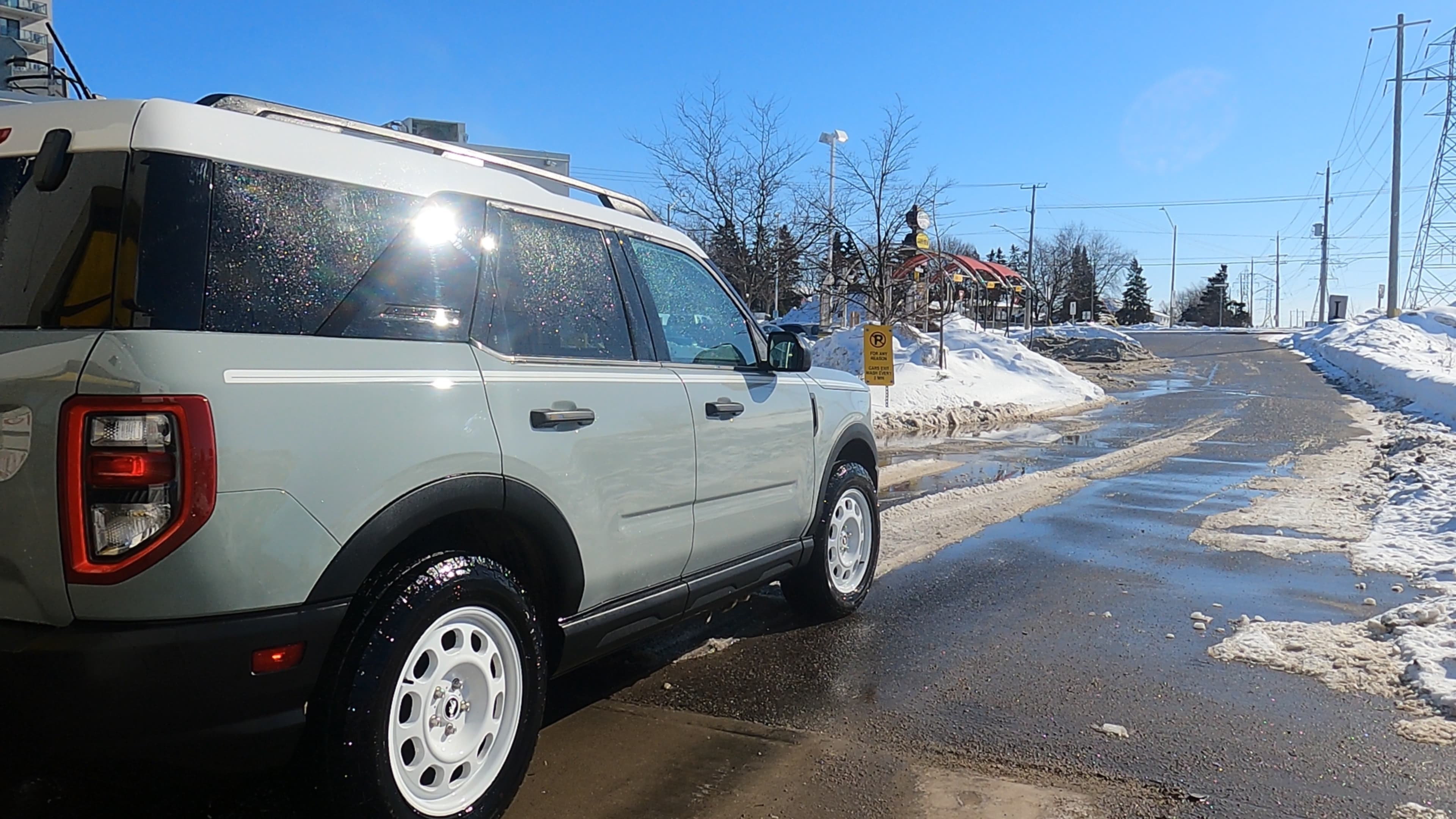
The snow is on its way out. The worst of winter is winding down, temperatures are creeping up, and Kitchener is starting to feel like spring is actually coming. But here is the part most people do not expect: the road salt on your car does not care that winter is loosening its grip. It is still working.
Right now, in early March, your car may be carrying more accumulated salt damage risk than at any other point in the year. Throughout the winter, repeated freeze-thaw cycles kept salt moving and washing away somewhat with snowmelt. But as temperatures shift and days alternate between dry and damp, residual salt sitting on your undercarriage and wheel wells keeps getting reactivated — dissolving back into brine every time humidity or moisture finds it, and restarting the corrosion cycle each time.
That white dusty residue on your rocker panels? That is not dirt. That is a reservoir of corrosive material waiting for the next damp day to go back to work.
 Cars lined up at Jet Auto Wash in winter — post-winter is the most important time to wash
Why Warm Weather Makes Road Salt More Dangerous, Not Less
Most people understand that salt is bad for cars in winter. What they do not know is that the chemistry actually gets worse as things warm up.
Road salt — typically sodium chloride or calcium chloride — works as a corrosion accelerator through a well-understood electrochemical process:
- Salt is hygroscopic. Calcium and magnesium chloride — both common in Ontario road salt blends — actively pull moisture from the air, even on days that feel dry. This keeps metal surfaces in contact with brine long after the roads look clear.
- Salt creates an electrolyte solution. When dissolved in moisture, salt becomes an electrically conductive liquid that dramatically accelerates the oxidation reaction between iron, oxygen, and water. This is the actual corrosion mechanism — it requires brine, not dry salt.
- Residual salt reactivates with every damp cycle. Salt left on your vehicle through late winter does not stay inert. Each time humidity or rain reaches it, it re-dissolves into brine and the corrosion reaction starts again. The cycle repeats until the salt is physically removed.
- Warmer temperatures speed up chemical reactions. Corrosion rates roughly double with every 10°C increase. March's warmer days mean each time residual brine forms, it attacks metal faster than it did in February.
The counterintuitive truth: The most dangerous period for a salt-exposed vehicle is not the depths of February. It is the alternating wet-dry days of late winter and early spring — when residual salt keeps reactivating with every rain or humid morning, attacking the same patches of metal over and over.
The 7 Places Salt Hides on Your Car (and Does the Most Damage)
Here is the problem with a typical driveway rinse: it cleans what you can see. Road salt does its worst work in the places you cannot easily look — or reach with a garden hose.
1. Wheel Wells
The plastic liners trap packed slush and salt behind them all winter. When the liner heats up in spring, the salt inside becomes a concentrated corrosive paste against the wheel well metal.
2. Rocker Panels
The long panels running below your doors take constant road spray from all four tires. They are seamed and hollow — meaning salt gets inside and works from the inside out, producing rust you cannot see until it is serious.
3. Undercarriage Frame Rails
Your vehicle's frame rails, crossmembers, and floor pan are the structural backbone of the car. Salt-induced structural rust is not just expensive — it is a safety issue that can fail Ministry of Transportation inspections.
4. Brake Lines
Thin steel brake lines run exposed along the undercarriage. Salt-corroded brake lines are one of the leading causes of brake failure in Ontario vehicles. A pinhole leak can mean immediate loss of braking force.
5. Exhaust System
From the manifold back to the muffler, your exhaust system runs the entire length of your vehicle's underside. It runs hot, which accelerates salt corrosion. Premature exhaust failure in Ontario is almost always salt-related.
6. Door Frames and Seams
Wherever two panels meet — door edges, trunk lip, hood seams — salt pools in capillary gaps. These are exactly the spots where paint bubbling starts, signaling rust working outward from inside the seam.
7. Trunk Lip
The horizontal lip of the trunk opening faces upward, collecting salt spray that blows up from the rear wheels. It stays wet and shaded, making it one of the most overlooked rust starting points on any vehicle.
Every one of these spots is unreachable with a garden hose. They require high-pressure water delivered at the right angle — exactly what a tunnel car wash's undercarriage spray system is designed to do.
What Rust Repair Actually Costs in Ontario (2026)
These are real Ontario repair cost ranges — not worst-case horror stories, but the actual numbers Kitchener-Waterloo drivers are paying at body shops when salt damage catches up with them.
The cost of doing nothing:
- Rocker panel repair: $500 – $1,500 per side
- Body panel replacement: $800 – $2,000+ per panel
- Brake line replacement: $300 – $700 per line
- Exhaust system: $600 – $1,800
- Structural frame rust: $2,000 – $5,000+ (or total loss)
- Resale value loss: 20 – 40% on a visibly rusty vehicle
The cost of staying ahead:
- Quality Wash Club: $24.95/month — unlimited washes
- Super Wash Club: $29.95/month — unlimited washes
- Ultimate Wash Club: $39.95/month — unlimited washes
- Every package includes full undercarriage spray on every visit
- First month free for new members
 A vehicle with rust can lose up to 30% of its resale value — road salt is the leading cause in Ontario
The math is not complicated. A single rocker panel repair costs more than an entire year of unlimited wash membership. And unlike a repair, a membership prevents the problem from starting.
Important: Once rust reaches your vehicle's frame or structural members, it can trigger a failed safety inspection under Ontario's vehicle standards. A car that cannot pass an inspection cannot be legally driven — and at that point, repair costs often exceed the vehicle's value.
Why a Professional Wash Beats a Home Wash for Post-Winter Decontamination
Water Volume and Pressure
A standard garden hose delivers roughly 10–15 litres of water per minute at low pressure. A professional tunnel wash system delivers 300–600 litres per minute at controlled high pressure, with spray nozzles positioned to reach recessed areas and undercarriage surfaces. Salt that has dried and bonded to metal requires that kind of pressure to actually break it free.
Undercarriage Coverage
Even with a pressure washer at home, reaching the full undercarriage requires the vehicle to be elevated and nozzles to reach horizontally across the full width from multiple directions. Tunnel car washes use fixed undercarriage spray bars that do exactly this, on every vehicle, on every pass.
 Inside the Jet Auto Wash tunnel — soft-touch foam brushes working on a Tesla Model 3
Specialty Cleaning Agents
Professional car wash pre-soaks and detergents are formulated to break down road salt and calcium chloride — not just water-soluble dirt. These products penetrate and lift salt crystals from surface contact points before the high-pressure rinse carries them away.
Consistent Results
A professional wash takes the same approach every time. No corners missed because it was cold outside. No gaps under the bumper that were hard to reach. Consistency is what prevents rust — not the occasional thorough hand wash followed by weeks of nothing.
 Jet Auto Wash Ultimate package tunnel — triple coat foam and undercarriage spray on every visit
At Jet Auto Wash, undercarriage spray is included in every wash package — Quality, Super, and Ultimate. It is not an upgrade. It is the baseline, because that is what your car actually needs.
How Often to Wash During Spring Salt Washout Season
Salt season does not end the day snow stops. In Ontario, road crews continue applying salt through freeze-thaw cycles well into March and sometimes early April. Even after active salting stops, residual salt accumulates on road surfaces and gets kicked up by traffic for weeks.
| Situation | Recommended Frequency |
|---|---|
| Daily commuter on city roads | Every 7–10 days |
| Highway commuter (401, Hwy 8, 7/8) | Every 7 days |
| Occasional / weekend driver | Every 2 weeks |
| After a freeze-thaw cycle | Within 48 hours |
| After last salt application of spring | One thorough decontamination wash |
For most Kitchener drivers, washing every 1–2 weeks through mid-April is the practical standard. That means six to twelve washes between now and when the risk genuinely subsides — which is exactly the frequency where an unlimited membership pays for itself immediately.
 Jeep Compass entering the Jet Auto Wash tunnel — every wash includes full undercarriage spray
Your Spring Decontamination Wash Checklist
When you come in for your post-winter wash, here is what to make sure is covered:
- Full undercarriage flush — Frame rails, suspension, exhaust, brake lines. This is the priority.
- Wheel wells — High-pressure rinse to clear packed salt from behind wheel liners.
- Door sills and jambs — Wipe down manually after your wash. Salt pools in these horizontal surfaces.
- Rocker panels — Check for any bubbling or discolouration after your wash. Early paint bubbling means rust is starting behind the panel.
- Trunk lip — Often overlooked. Wipe it down while you are cleaning up.
- Exterior paint protection — The Ultimate package includes a protective coating that helps repel future road grime.
Spring's warmer temperatures are accelerating salt damage right now. The window to stop it before it becomes a repair bill is open — but it is not open indefinitely.
Visit us at 1500 Highland Rd W, Kitchener. Open daily 6am – 10pm. Your first month is free.